My very first impression of Buenos Aires was a sense of déjà vu. The city and the people were instantly more familiar to me than the other places that we had been to before on the trip. Santa Teresa reminded me of Los Angeles, but I knew that I was somewhere new. In contrast, stepping off the boat and making our way to the hotel was far more European than anything else thus far on the trip. The language of the buildings and the people was distinctly continental with a fierce nationalism over it. Argentina is Argentine, but that identity was built clearly on the relatively uninterpreted vocabulary and patterns of continental Europe.
It is not really that surprising to learn that Buenos Aires experienced a massive influx of immigrants from Europe in the early 20th century that drove much of the development of the city and nation. The population between 1895 and 1914 nearly doubled and was one of the primary destinations for immigrants coming to the new world, behind the United States. The influx of immigrants from Italy, Spain, and France have especially left a mark on the culture of Argentina, but immigrants came from all over Europe, including Russians, Volga Germans, and, like my grandmother, Scandinavians. As a result, when the city was being planned in the late 19th century and early 20th century, much of the urban planning and ideals were imported directly from Europe. The European monumental metropolis was to be raised in Buenos Aires, their new home.
In many ways, they succeeded. The city is massive and block by block resembles Paris or any other European city. That was the source of my déjà vu, as well as the fact that the cuisine had suddenly become distinctly European. The art nouveau decoration and sensibility that you find in the streets of Paris is here. The subway system clearly echos the belief of the era that all cities of note should have a subway system. The entire city feels as if it had been transported from somewhere in France or Spain and dropped here.
After the break, we will visit three top picks, including Avenida 9 de Julio, the Pink House, Recoleta, and Puente de la Mujer (The famous bridge by Spanish Architect Santiago Calatrava).
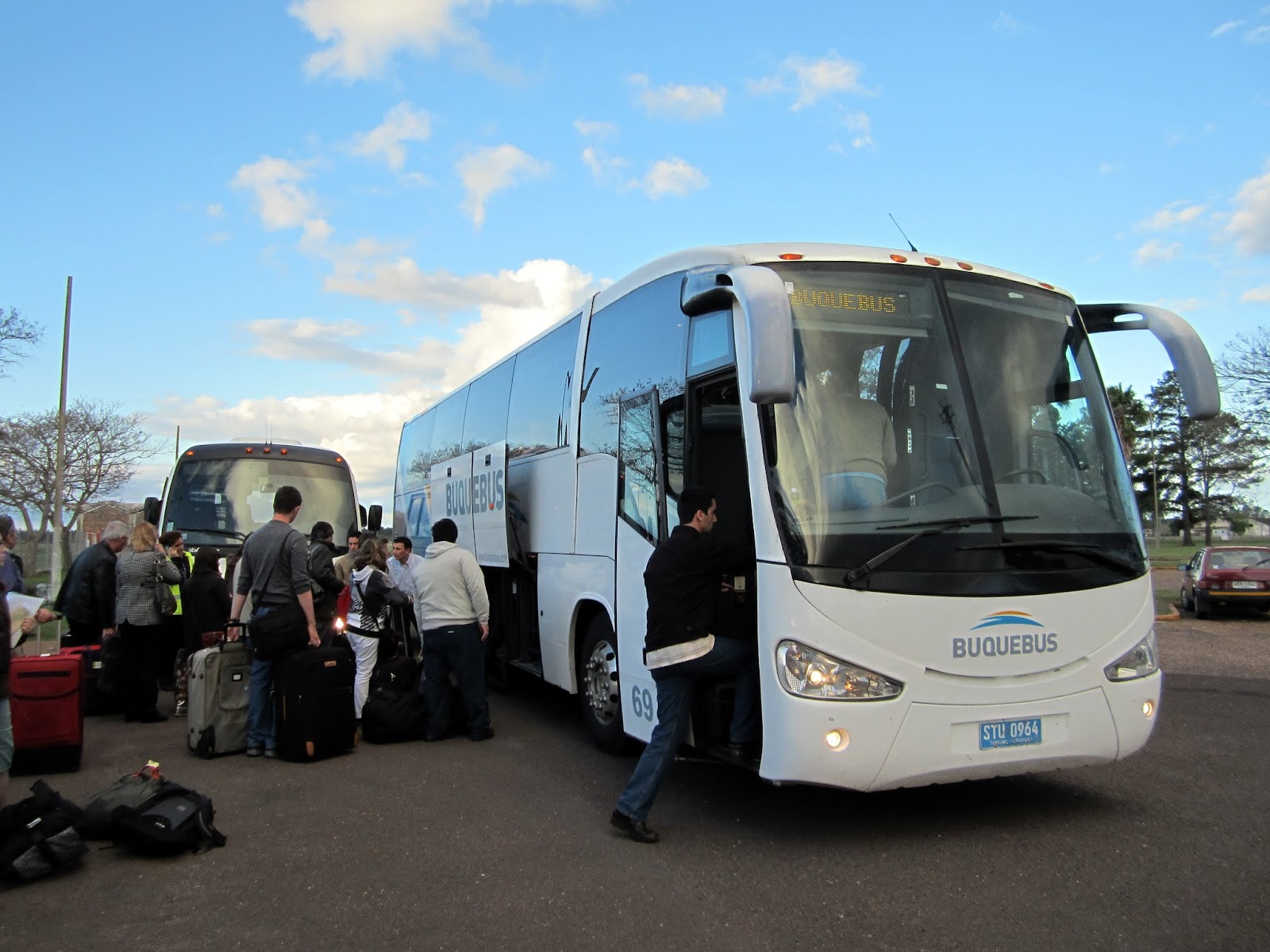
After getting caught in the tail end of a hurricane and crossing Uruguay by bus from Salto to get in to Montevideo past midnight, the next morning it was time to go. The city was bouncing back to normal, but we had no time left. After breakfast at the After Hotel, we squeezed into the supremely undersized Uruguayan taxi cabs and headed for the Buquebus terminal.
Our hotel looked great and was really comfortable, for the 9 hours that we spent there total. The front desk staff was exceedingly helpful and friendly as well, and best of all? It was pretty inexpensive. We had planned to stay an extra night here before Pluna went bankrupt and we had to change our itinerary, but we would have been pretty happy here.
The most that we saw of Montevideo was from the taxi ride to the ferry terminal. It looked like an interesting city. I would have liked to spend more time there, but it wasn't in the cards for this trip. Instead, we were on to the boat to Buenos Aires. At the terminal here, you check in and then go through pass control. I can confirm for those looking for a way around the reciprocal fee for the Argentine visa that entering the country by ferry lets you skip the $160 fee.
Once on the boat and away from the dock (we needed a tug because of strong winds), it was smooth if uninteresting sailing from there. After a few hours, Buenos Aires appeared on the horizon with the skyline set against the gray skies. As we drew closer, my thoughts turned elsewhere, back to Stockholm. Part of the reason that I wanted to come to Buenos Aires was because nearly 90 years ago my grandmother also arrived in the port of Buenos Aires by sea. She was a child at the time and doesn't remember much from the time that she and her family spent there, but in some way this was an echo back to that event and the photo of this exact harbor that she shared with me in Stockholm. The tall ships are gone and the skyline today strikes upward, but this is where she was so long ago.
And tomorrow, I would start my own exploration of the city.
Getting from Iguaçu to Uruguay was originally supposed to by an easy, time saving side trip. We would fly in on a direct Pluna flight to Montevideo, spend two days there and then take the ferry direct to Buenos Aires. All total, we would save $160 per person by avoiding the reciprocal fees at the Buenos Aires airports and check off another country. Easy, right?
Except then Pluna went bankrupt and was shut down and until the day before our flight we weren't 100% sure if we were leaving from the Brazilian or Argentine airport. Buquebus, the airline that we got our replacement tickets on (still to Montevideo), doesn't actually use airport codes on their website. We knew we left from the area, but which airport was something that only a local call to the airport could actually answer.
A couple lessons from this: First, if your airline goes bankrupt, call your credit card and contest the charge. You may be able to, as we did, recoup the cost of the ticket with minimum stress. The second, in times like this, don't panic. There is always a solution. If we hadn't been able to find this replacement flight at the right price, there were buses that could take us directly to Buenos Aires overnight. Most things you can fix.
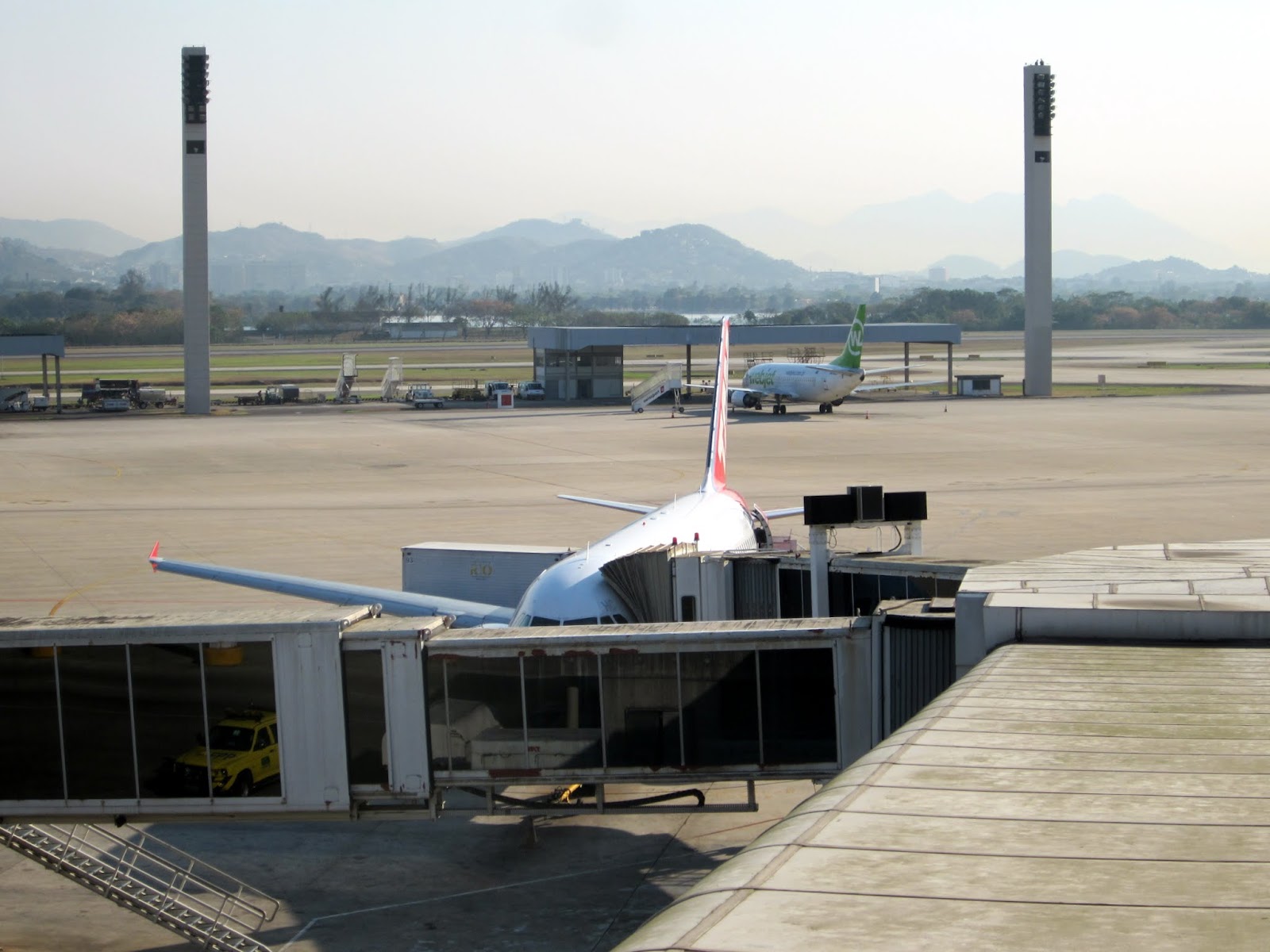
The day of our flight we caught the bus from the central bus station in Foz do Iguaçu and headed to the airport. The trip took about 40 minutes along the main road and finally, we were at the airport. Check in went smoothly and we were given some of the most atypical boarding passes I've seen to date. They were nothing like the regular boarding pass stock and we were given stickers for our seat assignments.
Security went smoothly and then into the boarding area. There are no services except for a small snack bar in the international area that we were in, so beware that once you start towards security you lose your ability to change money, which might be important if you have excess guarani. It is basically worthless outside of Paraguay (On that note, if you have a few nice guarani notes left over, I would be interested in them. Email me!) We headed over to our plane and proceeded to... wait.
We were there for about an hour plus after boarding and watched two planes land and one of them leave again. While we were waiting, people were in generally good spirits, except for one young child who was fussy over being hungry and thirsty. When the flight attendants offered some water and a cracker pack, some others started to pretend to whine as well, jokingly asking for "Papa fritas" (French fries) and "aqua con gas" (carbonated water). Despite the delay, people were at least having fun. We pushed back and were finally off to Salto, which was our first stop before heading to Montevideo.The flight had a little chop, but mainly below there were light fluffy clouds and green land underneath. Our in flight snack was pizza flavored crackers and small pouch of cookies.
Landing in Salto, I had a bad feeling. As we pulled up to the tiny airport, I noticed immediately that there was a bus waiting just on the other side of the fence. Once the plane had shut down, the captain came on the overhead and then the fun started: It was too windy in Montevideo to fly there and we would be taking a bus the rest of the way...
...for the next six hours.
The entire plane took it in stride. At most, people gave a low grown and then got ready. We figured it was bad news, but didn't really know what was going on. That is part of the adventure of travel, and sure enough we left the plane, went through security and got stamps in our passport and then headed off by bus. We stopped at a gas station, bought snacks for the trip, and settled in for the ride. Eventually we got to Montevideo just past midnight and found out why we couldn't fly there directly: They had been hit by a hurricane and everything had been shut down.
The 24 hour McDonald's at the main bus terminal? Closed. The other 24 hour McDonald's near our hotel? Closed. The city wasn't too badly damaged, but signs had been uprooted out of concrete, branches were everywhere, and in general people were pretty shocked that they had been hit by such a strong storm. At the very least, I can say that I was impressed with how quickly they recovered. Just the fact that they had a bus waiting for us at Salto was probably a sign that they had things pretty well organized, given the storm and the confusion that must have come with being hit by that.
Finally, after a long trip we settled into After Hotel (which was very nice with very helpful staff), and got ready to get up and head to Buenos Aires.
After a day at Iguaçu Falls and the Caratas Hotel, we left the falls and headed into the nearby town, Foz do Iguaçu to stay the night and then depart the next day. Setting up the next leg of the trip from Foz do Iguaçu to Buenos Aires was one of the biggest challenges that we had in setting up the trip. We wanted to avoid the reciprocal fee that Argentina charges American tourists at the two main airports in Buenos Aires and also wanted to check another country off our list. First we had tickets on PLUNA to Montevideo, but they went bankrupt. Fortunately, Buquebus happened to have flights that would work for us the next day and we were able to shift things around. We were scheduled to have an evening in Montevideo and then off to Buenos Aires, but that is not exactly what happened.
But before the the flight, we had a chance to stay in the city Foz do Iguaçu itself and visit the Avian Park that is near the falls. I like birds and brightly colored tropical birds are not something that I get to see too often. When I was in Mongolia, one of the highlights of the trip was holding a Golden Eagle on my arm and this ended up being the avian highlight of the trip. The park is geared towards children, but it does offer you a chance to get close to get close to some of the iconic birds of the region, like toucans and macaws.
The hummingbird house was one of the highlights, especially with my new camera that is equipped with slow (albeit low-resolution) motion.
After the bird park, we went into the city for our night there. We stayed at the Pousada Sonho Meu, which is on the other end of the spectrum from the Caratas Hotel. It is a perfectly serviceable hotel on the lower end (about $30-40 per person) and it is located about two blocks from the main bus terminal (which goes to the airport and the waterfalls). There isn't too much in the town itself for visitors. While the entire main street was once redone to be more bike and pedestrian friendly (complete with handicap ramps!), the main downtown area is pretty quiet. We didn't have a lot of time to spend, and there really isn't much to do. I only regret not getting a couple thousand guarani (Paraguayan currency) from a money changer. At $0.0002 per guarani, you only need $225 to be a millionaire.
Finally, we were off to the airport. It's a good idea to get the bus at the bus station if you are in the area. These buses are designed for capacity and there are few seats on board. If you want them, you need to among the first on the bus at the bus station, which is where the route starts.
When this trip was first on the table and we were considering where to go, we originally had no plans to visit Iguacu. Fortunately for us, Argentina charges Americans $160 as a reciprocal fee when entering the country at the two main airports which caused us to look at ways of getting around paying the fee. While researching our options and what flights we could take, I found Iguacu Falls and worked out that visiting Uruguay with a stop in Iguacu was only a little more expensive than flying directly there. Visiting the falls was one of the best choices we made. It put us in contact with an absolutely unreal natural wonder.
Because of time constraints, we only had a single full day at the falls. To do the falls correctly, you are supposed to visit both sides, the Brazilian side (where we visited) and the Argentine side. On arrival, another couple from the United States told us that, "There is absolutely nothing on the Brazilian side!" We were worried that we had made a mistake, since there is a lively debate about which side is best online, but the next day as we walked down to the falls with only two other people there, the unfolding of the falls proved that the couple was way off. If this is "nothing", then what on earth is on the Argentine side? The experience that we had was just about perfect, and brought us out and over the falls itself to be alone with it.
The couple was probably commenting that the majority of the "xtreme" activities were on the other side and there are a few more trails there as well, but with our time limits this was perfect. All this above, however, was "nothing". To us it was an amazing landscape that just kept getting better.
After the break, we will take a look at Hotel Cataratas and some more photos and video from the Falls.
Our time in Rio was up way too quickly. We easily could have spent another 3 or 4 days in Rio without running out of things to do or getting tired of going to the beach, day after day. Fortunately for us, the end of Rio wasn't the end of our adventure. Our next stop is Foz do Iguaçu, which is where we will find Iguaçu Falls which is larger than Niagara Falls.
We flew with TAM directly there and this is the second time that I used my new technique for taking time lapse photography on the plane. It would have been just about perfect, except for a Flight Attendant who didn't take too kindly to my breaking the "no electronics" rule (cameras should be an exception). Here is the end result:
The last 15 minutes of the flight was phenomenal. We experienced some turbulence on the way in, which is because the entire region was experiencing storms (something that we would make for an interesting trip on our next flight a few days later) but because of that the lighting was very surreal. All of those photos after the break!
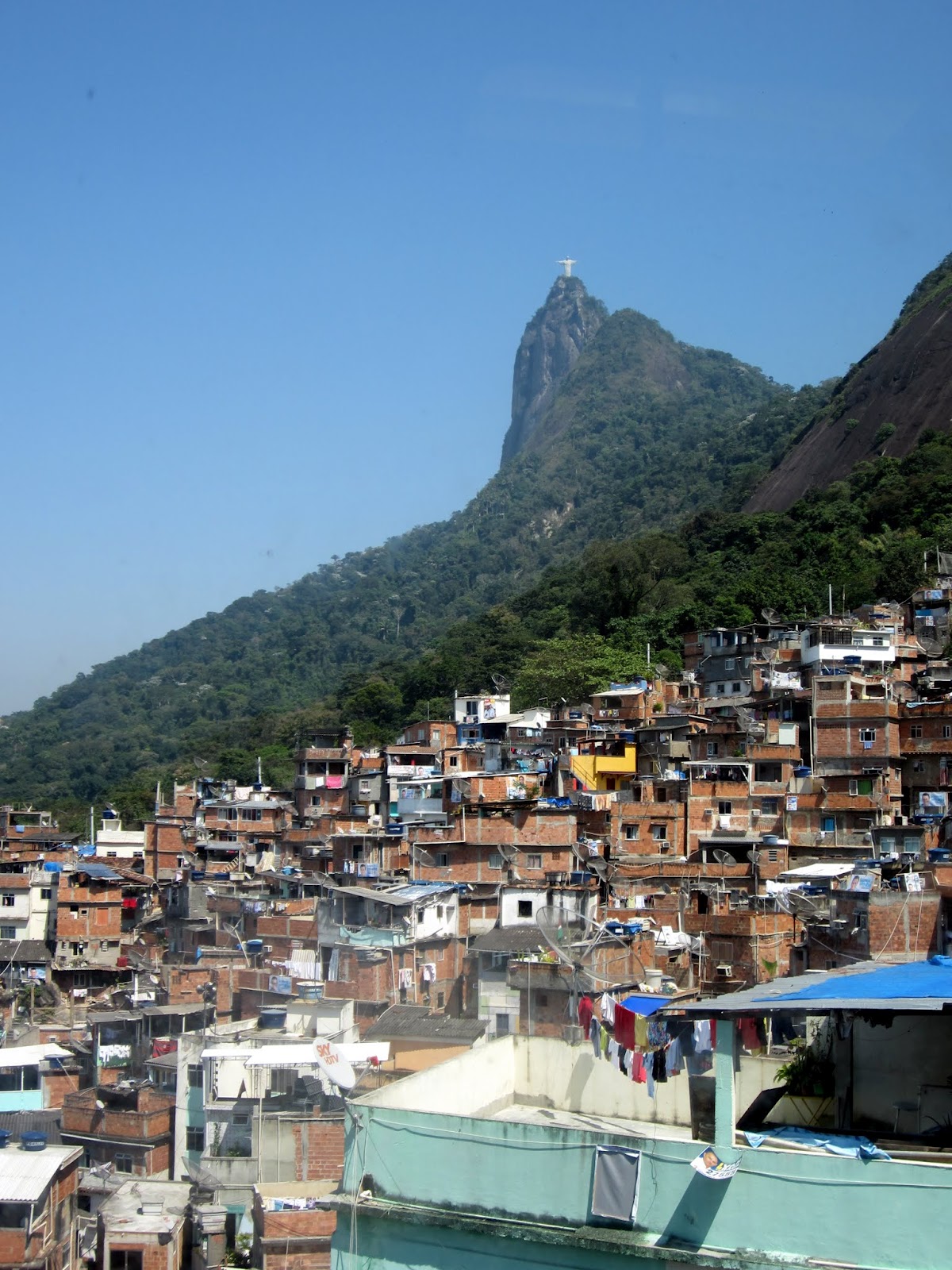
Rio is a fantastic place, but the city is not all glitz and glamor. One of the things that becomes distinctly obvious when you are in the city is that the city is really several cities on top of each other that are interwoven, but separated by money and class. Just as synonymous with Rio as Ipanema, the Favela is also part of the city and its identity.
A favela is what is often inelegantly called a "shanty town", but from an urban planner perspective these area are informal settlements. They are part of the built environment that were built without architects, planners, or engineers and instead with the materials on hand and expertise developed through experience. They are also notable because favelas are usually located on hillsides that the formal city ignored. While I was in Rio, I wanted to visit Santa Marta, which is a favela that I studied while in Sweden as part of a human settlements and housing course. From Scandinavia, I had already studied the maps, structures, and satellite images of the area, along with news papers and research on Santa Marta and the socioeconomic issues involved. I wrote a paper on the place, but I had never been there. This was a chance to see it for myself and touch what I studied.
There are some issues involved with visiting a favela. The first and foremost is whether you should visit one at all. Favelas exist because of economic inequality and as a foreign tourist, you stand on the privileged side. In many ways the economic disparity that causes favelas to exist is also the reason you are able to enjoy Rio to the extent that you do. Your hotel room in Rio for a single night is likely more than half a month of rent in a favela (which is between $75-$250 a month, according to here). When you visit a favela, you are seeing a side of Rio that is foreign to you. It is another city and although some favelas (such as Santa Marta) are becoming safe enough to visit independently, your presence in this tight knit community is almost a transgression. The streets and stairs in the favela were built by the the people who live there, not by the government, and you are using them. It would be easy to come into the community as a poverty tourist, someone who engages the community as an exploitative voyeur. Many of the tourist that now visit favelas are likely motivated either by a romanticism of poverty, a sense of curiosity similar to when you visit a zoo, or in the worst of cases, a desire expressed or unexpressed to experience schadenfreude upon seeing the "others". Our intent was none of these, and we hope that our intentions were understood through our actions and respect for the place.
On other side of this question, is it right to simply ignore these places and the social division in Rio? Rio de Janeiro is a city of contrasts and experiencing the community and place of a favela is a way to gain balance in your perspective. It is also a way to balance the image of favelas, portrayed in the news and media, with the realities of the favela. By being there, you can gain a better understanding about what is true and what is drama. This is something that can have value if it is done right. In our case, we hired a local guide named Gilson Fumaça because we felt that the jeep tours didn't give us enough assurance that what we paid would go directly to the community. He is from the favela and works there when he doesn't have a tour going on. He is part of the Rio Top Tour program, which helps train favela residents to offer their own tours of the favela without having to go through a middle man. Even though there was a language (helped dramatically by another guide that decided to join us/took pity on us), one that that Gilson was able to do was to make us more accepted within the community. As we walked, it became clear that he knows the community and is on good terms with seemingly everyone. He would great an old lady who would go from at first wary of us to smiles, after a few words and a smile from our guide. After the tour, both of us (I was there with my other planner friend) felt that even though we weren't able to ask as many questions as we would have liked due to us not speaking Portuguese, having Gilson show us around was the right way to visit. Today, after visiting, I would say that this favela, Santa Marta, is safe enough to visit independently, but I remember seeing some other unguided tourists and it was clear that they were not really welcome from the looks they were getting. Tourism in the favela is still a debate.
After the break, many more pictures from the favela and my observations of the favela and what it means for the city.
Last time we visited the two biggest tourist attractions in Rio de Janeiro, the Corcovado and Pão de Açúcar. This time, we take a look at three more: the ever famous Ipanema Beach, the eccentric Escadaria Selarón (Selarón's Staircase), and the beautiful Jardim Botânico near Leblon.
We started the day in Santa Teresa and visited Escadaria Selarón, which is a tile covered stairway that connects the Lapa and Santa Teresa neighborhood. It started in 1990 by the artist Jorge Selarón as a simple repair of some steps outside of his house and since then it has grown to cover all the entire staircase, as far as you can see.
The decorative tile work has become an international collaboration. People from around the world have donated tiles to the project and half the fun is trying to find the tile that came from your corner of the world. Washington was well represented about six tiles featuring Native American art. Everywhere has a tile and everything seems to have a tile too. The Hanshin Tigers (my favorite Japanese baseball team) and even AC/DC were all on there.
While we were there, we also had a chance to meet the artist himself. He was there working on a new section of the stairs. He has a small artist space where he stores tiles and sells small paintings to fund his work, all of which feature some variation on a pregnant black woman (something that the artist the artist is cryptic about). All of the paintings that I saw had the same basic pattern, except for the one he likes to pose with up above...
Up next, the botanical gardens and the stunning Ipanema beach!