Showing posts with label Trip Report. Show all posts

Wednesday, July 29, 2015

Peruvian Journey: Part 1 - Lima


Welcome to Peru! My most recent trip was back to South America (by way of Toronto) for a journey up to Machu Picchu. Naturally, the first stop for virtually any trip to Peru is going to be Lima, the capital city and main international airport for the country.

If you are traveling to Lima, a couple pieces of advice: From the airport, you are going to want to grab a green cab. There will be a huge group of them and for airport to the city, the is the easiest option. In terms of expense, it's about $18 from the airport to Miraflores or Barranco, where you are likely staying. The price is fixed and tipping is not expected, however before you run off be sure that you check the sign and confirm the price. If not, then you may end up with a guy that tries to get a couple extra bucks out of you. Not the worst in the world, but it ends up being an ignorance tax.


The city itself is on a bluff next to the Pacific Ocean and is massive. More than ten million people call Lima home, which gives rise to some very stark contrasts between the haves and have-nots (as everywhere). Areas around Centro and closer to the airport are going to show a much more modest version of Peru, while Miraflores and some of the surrounding neighborhoods are lush and high end. Miraflores and Barranco both felt perfectly safe to walk around, even at night. Some of the other areas were obviously places that I wouldn't want to be out there as a tourist. As for when to go, summer in Lima means rain in the Sacred Valley, while dry season in the Sacred Valley means grey days as seen above. It is still warm, but it's not especially pretty.

I was in the city for a total of two and a half days. By far, one of the more interesting places that I visited was the Larco Museum, which houses and extensive collection of Inca artifacts. I'll go more into my thoughts on the Inca empire in another post, but this was what wet the whistle. The level of creativity and playfulness on display was very cool.


In addition to the pottery, there is also examples of the gold working of the Inca empire. One thing that I learned from this was that most of the gold on display that impressed the Spanish so much (and triggered a bloody subjugation driven by their greed of the native people) was actually thin sheets of a gold alloy. In reality, it really wasn't the solid gold treasure that we hear about.

Larco Museum is also home to a collection of very NSFW clay pottery in another section. Obviously, pictures are not forthcoming, but it is pretty obvious that the Inca relationship with sex was not the same as after the Catholics got there. Not at all.

In the next post, we'll take a look at some of the tastes of Lima, including Amaz, Pan de la Chola, La Lucha, and the fantastic Ayahuasca bar.

Saturday, December 07, 2013

Let's go to Beverly Hills!


About a week ago I had a super quick trip to Beverly Hills. There was a position that was open and I was invited to sit for the exam, so I took the day off and went down to throw my name in the hat. I had less than 24 hours there, but the trip ended up being good: I had a chance to reconnect with some friends and take a quick look around the famed Beverly Hills. 

My first memory of hearing about Beverly Hills comes TV, but not from what you're probably thinking of. I never saw Beverly Hillbillies and 90210 wasn't it either. The very first time I remember "Beverly Hills" being mentioned was this monstrosity:


Beverly Hills Teens. "Come live your fantasy in Beverly Hills. Come on and make your dreams come true..." Somewhere between Transformers, Teenage Mutant Ninja Turtles, and Inspector Gadget there was this. The 1980s were something else and there was so many cartoons floating around. If you watch the intros to the cartoons that played on Saturday morning, I bet you'll recognize some that you've long forgotten.

But, on this trip I had a chance to take a look around the actual city of Beverly Hills. The city was established in 1914 and exhibits a rather beautiful design that takes advantage of the natural features of the area. The story is that after some oil prospectors failed to find any oil in the area, they decided to try to set up their very own city. The city was laid out by Wilbur D. Cook who was heavily influenced by the Olmsted Brothers and reflects an approach to planning called "City Beautiful". This was a movement that preferred organic shapes, placed emphasis on civic pride and monumentalism, and the need for nature near to where people lived. It was a softening of the geometric grids and the idea that cities could be better places than they were. It's a goal is still central to urban planning today, even if the terminology and ideas about how to get there have sometimes changed.

A lot of the places that we really like today came from this era and Beverly Hills is actually pretty nice. The streets north of Santa Monica Blvd curve elegantly without completely losing the efficiency that a grid system offers. The houses are mostly upscale and become nicer as you move into the actual hills. The city leaders built a very nice civic complex, starting with the city hall below. With about 35,000 people and a more geometric downtown core, it seems like they have actually done a good job at managing their growth over the past 100 years (which you can see in the image to the left). 
Of course, as beautiful as it is, with only 24 hours there's not much time to do anything... except perhaps to try some cupcakes!


Sunday, November 24, 2013

Let's Fly on a Seaplane to Victoria BC!

Victoria BC is a popular day or weekend trip from Seattle. The provincial capital (literally, the capital of British Columbia) is a beautiful city and is the gateway to Vancouver Island and Vancouver city for many travelers. It is a small, walkable city with family friendly attractions and decent transit options for getting out to the attractions that are a little further out, such as Buchart Gardens.


There are a couple different way to get to Victoria from Seattle. There is the Victoria Clipper for foot passengers, the car friendly Black Ball Line from Port Angeles, and automobile ferries from either Anacortes or Tsawwassen in BC. I have taken all of these, but there are two more options: You can fly from Seatac into Victoria airport (located to the north of the city) or... you can fly in style on a seaplane into the inner harbor itself with Kenmore Air.

If you are looking to make the journey, here are a couple helpful links to your options (All estimates are just that: estimates):

  1. Kenmore Air (Seaplanes from Lake Union in Seattle)
    • 45 minutes, ~$135 to Victoria and $159 to Seattle (~$295 round trip), passenger only.
  2. Victoria Clipper (Fast Foot Ferry from Seattle Waterfront)
    • 2.75 hours, $88 one way or $140 round trip ($107 with advance purchase, passenger only.
  3. Black Ball Line Ferry (Auto Ferry from Port Angeles)
    • 4.5 hours (2 hours, plus 2-2.5 hours by car from Seattle), ~$150 round trip ($34 round trip for a passenger, $87 round trip for a car, $13.55 for Seattle to Bainbridge Island with a car, plus gas).
  4. WSDOT Ferries (Auto Ferry from Anacortes)
    • 4.5-5 hours (2.75 hours, plus 1.5-2 hours from Seattle), $81 round trip (plus gas)
  5. BC Ferries (Auto Ferry from BC)
    • 4.5-5.5 hours (1.5 hours, plus 3 hours drive from), $125 round trap (plus gas)


I had never tried Kenmore Air and when the opportunity came up to fly this time around, I jumped on it. Kenmore Air is a small nearly seaplane only airline that flies out of Lake Union and into the Victoria Harbor. Prices right now are about $135 each way for the short 45 minute minute flight, which is just about double the fare of the Victoria Clipper. The disadvantage with Kenmore Air besides price is that you are limited to very little in the way of luggage (about 10kg). However, in many ways it's a better deal overall: Not only does it take less time (about 2 hours faster), but there is less hassle checking in and waiting for your trip to start. Oh, and the views. Flying low over the Puget Sound is amazing!


Tuesday, November 13, 2012

Buenos Aires: The Funkier Side


After seeing the sights, it is always nice to check out some of the more offbeat attractions of the city. Top on the list were two attraction in the southern side of the city: The San Telmo Antique Market and the origin of the tango sound, the Caminito.

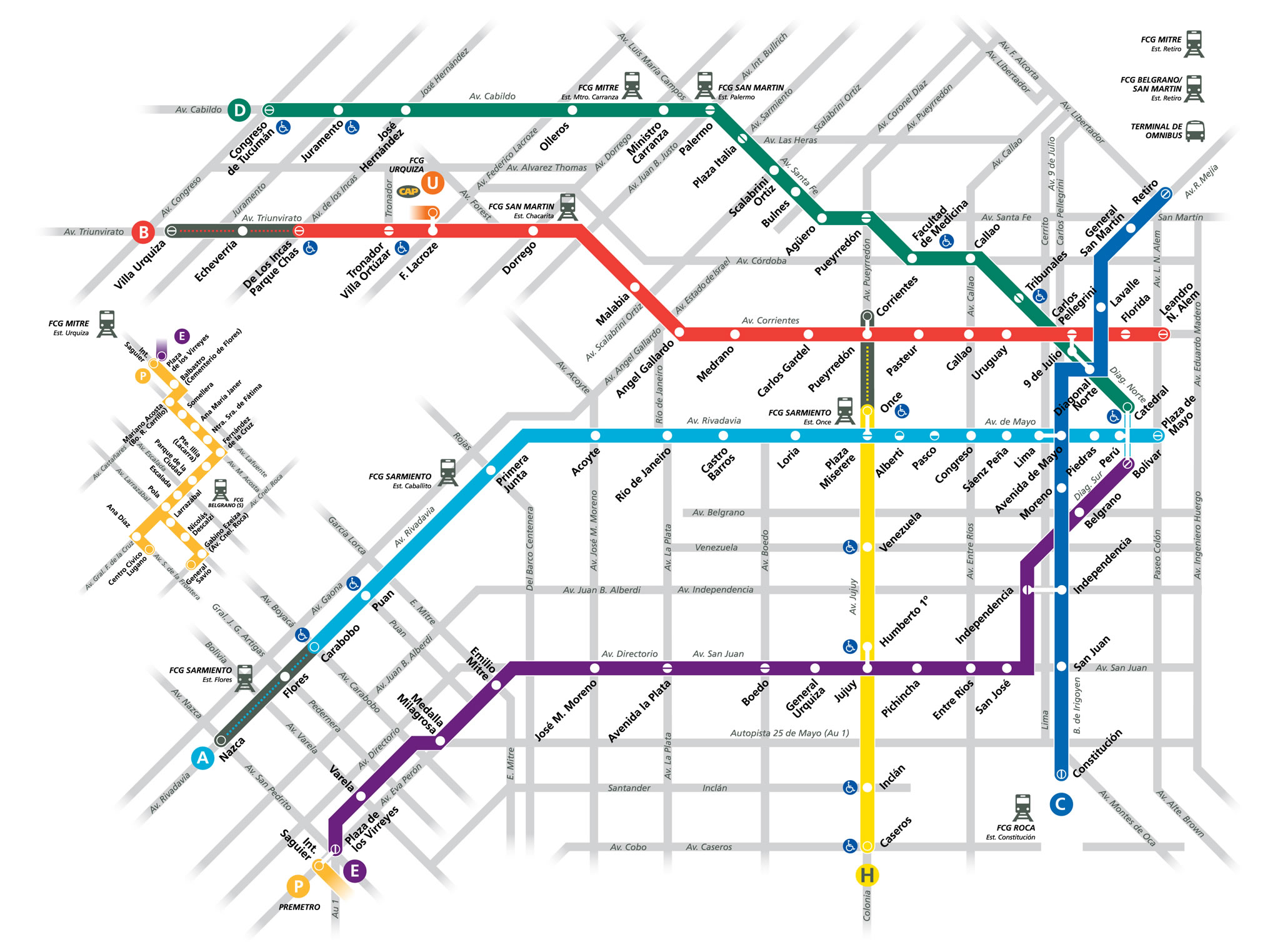
The San Telmo Antique Market was our first stop. To get there, you can take a cab or hop on the Subte Line C to San Juan (Subway Map). From there, it is a half mile walk to the market. Once there, you are in a top notch antique market that fills the entire square. Each table has it's own thing and vendors of seltzer bottles stand right next to tables full of original art, books, or clothing. There is something a the market for everyone, including me: I bought a 50 year old subte token to add to my transit pass collection.


The market is huge and most of the things on sale reflect both the prime location and popularity of the market. Things are expensive, but do not be afraid to haggle. The first price you get is likely double what they will actually take in many cases (especially for nick-nacks like my token). The market is large enough to easily soak an hour or two of your time, or more if you aren't hurrying off to the next place. It's well worth a visit and the one of the best markets I've been to.

After the break, more from the San Telmo Antique Market, the famed (but overrated?) Caminito, and Street Art galore!

Friday, November 09, 2012

Buenos Aires: Déjà vu

My very first impression of Buenos Aires was a sense of déjà vu. The city and the people were instantly more familiar to me than the other places that we had been to before on the trip. Santa Teresa reminded me of Los Angeles, but I knew that I was somewhere new. In contrast, stepping off the boat and making our way to the hotel was far more European than anything else thus far on the trip. The language of the buildings and the people was distinctly continental with a fierce nationalism over it. Argentina is Argentine, but that identity was built clearly on the relatively uninterpreted vocabulary and patterns of continental Europe.


It is not really that surprising to learn that Buenos Aires experienced a massive influx of immigrants from Europe in the early 20th century that drove much of the development of the city and nation. The population between 1895 and 1914 nearly doubled and was one of the primary destinations for immigrants coming to the new world, behind the United States. The influx of immigrants from Italy, Spain, and France have especially left a mark on the culture of Argentina, but immigrants came from all over Europe, including Russians, Volga Germans, and, like my grandmother, Scandinavians. As a result, when the city was being planned in the late 19th century and early 20th century, much of the urban planning and ideals were imported directly from Europe. The European monumental metropolis was to be raised in Buenos Aires, their new home.


In many ways, they succeeded. The city is massive and block by block resembles Paris or any other European city. That was the source of my déjà vu, as well as the fact that the cuisine had suddenly become distinctly European. The art nouveau decoration and sensibility that you find in the streets of Paris is here. The subway system clearly echos the belief of the era that all cities of note should have a subway system. The entire city feels as if it had been transported from somewhere in France or Spain and dropped here.

After the break, we will visit three top picks, including Avenida 9 de Julio, the Pink House, Recoleta, and Puente de la Mujer (The famous bridge by Spanish Architect Santiago Calatrava).

Thursday, November 01, 2012

Montevideo to Buenos Aires by Boat

After getting caught in the tail end of a hurricane and crossing Uruguay by bus from Salto to get in to Montevideo past midnight, the next morning it was time to go. The city was bouncing back to normal, but we had no time left. After breakfast at the After Hotel, we squeezed into the supremely undersized Uruguayan taxi cabs and headed for the Buquebus terminal.


Our hotel looked great and was really comfortable, for the 9 hours that we spent there total. The front desk staff was exceedingly helpful and friendly as well, and best of all? It was pretty inexpensive. We had planned to stay an extra night here before Pluna went bankrupt and we had to change our itinerary, but we would have been pretty happy here.


 The most that we saw of Montevideo was from the taxi ride to the ferry terminal. It looked like an interesting city. I would have liked to spend more time there, but it wasn't in the cards for this trip. Instead, we were on to the boat to Buenos Aires. At the terminal here, you check in and then go through pass control. I can confirm for those looking for a way around the reciprocal fee for the Argentine visa that entering the country by ferry lets you skip the $160 fee.


Once on the boat and away from the dock (we needed a tug because of strong winds), it was smooth if uninteresting sailing from there. After a few hours, Buenos Aires appeared on the horizon with the skyline set against the gray skies. As we drew closer, my thoughts turned elsewhere, back to Stockholm. Part of the reason that I wanted to come to Buenos Aires was because nearly 90 years ago my grandmother also arrived in the port of Buenos Aires by sea. She was a child at the time and doesn't remember much from the time that she and her family spent there, but in some way this was an echo back to that event and the photo of this exact harbor that she shared with me in Stockholm. The tall ships are gone and the skyline today strikes upward, but this is where she was so long ago.

And tomorrow, I would start my own exploration of the city.


Saturday, October 13, 2012

The Sights of Rio de Janeiro (Part 2)

Last time we visited the two biggest tourist attractions in Rio de Janeiro, the Corcovado and Pão de Açúcar. This time, we take a look at three more: the ever famous Ipanema Beach, the eccentric Escadaria Selarón (Selarón's Staircase), and the beautiful Jardim Botânico near Leblon.


We started the day in Santa Teresa and visited Escadaria Selarón, which is a tile covered stairway that connects the Lapa and Santa Teresa neighborhood. It started in 1990 by the artist Jorge Selarón as a simple repair of some steps outside of his house and since then it has grown to cover all the entire staircase, as far as you can see.

[1/10/2013: Jorge Selaron sadly passed away. Rest in peace.]


The decorative tile work has become an international collaboration. People from around the world have donated tiles to the project and half the fun is trying to find the tile that came from your corner of the world.  Washington was well represented about six tiles featuring Native American art. Everywhere has a tile and everything seems to have a tile too. The Hanshin Tigers (my favorite Japanese baseball team) and even AC/DC were all on there.


While we were there, we also had a chance to meet the artist himself. He was there working on a new section of the stairs. He has a small artist space where he stores tiles and sells small paintings to fund his work, all of which feature some variation on a pregnant black woman (something that the artist the artist is cryptic about). All of the paintings that I saw had the same basic pattern, except for the one he likes to pose with up above...


Up next, the botanical gardens and the stunning Ipanema beach!


Keep reading after the break!