Thursday, June 18, 2015

8 Hours in Oslo - Wandering around Town

Downtown Oslo, near Central Station

The Royal Palace


Public play equipment: This is one of the popular tight ropes that are often seen being set up between two trees. By providing this, Oslo is helping engage passers-by and activate the space. People stop and watch and even chat a little due to this thing just being there.


Vigelandsanlegget in Frogner Park

They match. :)

Uh, Children?

...you shouldn't be doing that...

See?


 Oslo's efficient subway system. I also got a chance to add a new transit card into my collection!


Wednesday, June 17, 2015

8 Hours in Oslo - Second Stop: Oslo City Hall


Scandinavia has a good track record for building impressive city halls. Stockholm City Hall (Stadshuset) is one of my favorite buildings in the world. Köpenhamn's city hall isn't bad either. While Stockholm's city hall reflects Sweden's national romantic movement, Oslo's city hall was completed after World War II and pulls on both the romantic ornate style and some of the updated thoughts that came through between 1930 and 1950 (Construction and the design was actually started in the 1930s, but was paused due to the outbreak of the war).

While the exterior is impressive in itself, the interior is fascinating. What you see on the walls is the history of Norway emerging as a national identity and what it endured during the war years. Norway was occupied by Germany in order to provide bases for u-boats, to provide a secure route for Swedish iron from Narvik to Germany, and to preempt any invasion by Britian that would cut off iron from Germany (which was seriously considered). During the war years, a puppet government led by Vidkun Quisling (Quisling still retains an inherently negative tone for betrayal in Norway) and his native fascist party (the "National Gathering") was put into power. In reality, the reichskommissar appointed by Hitler held power.

Norway largely resisted Germany during the war years. The resistance in Norway is credited with hindering Hitler's nuclear ambitions by sabotaging a shipment of heavy water (used to control fission) and smaller acts such as ensuring that German submariners had gastrointestinal distress while at sea. Many Norwegians suffered during the war at the hands of both the Nazis and Norwegian collaborators. The experience was etched into the national psyche after the war. The story is woven into the stories told in the interior art of the city hall.

German soldiers hide from the Norwegian people in a cave, along with a troll and snake.
German conspirators depicted in the main hall of Rådhuset in Oslo
The artwork is of course not dominated by World War II. It merely reflects that in 1950 it was a fresh and critical experience that was a catalyst for a stronger Norwegian national identity. The building is full of beautiful rooms and spaces that celebrate other aspects of the Norwegian society and sense of self, as well as provide needed space for the ceremonies and functions that are called for in the capital's city hall (including the Nobel Peace Prize ceremony). The main hall, shown below, is a clear echo of Stockholm's Blue Hall but takes a much different approach. While Stockholm's hall is marked by a decision to allow the walls to remain unadorned, the Oslo space is covered in art.

One of the walls is covered with a depiction of Norwegian industry and work, while the other portrays civil society.


At one end of the hall is also the mural below. The mural focuses on emergence of socialism in Norway, the reasons that caused citizens to take action, and the vision for the future. On the left, is the depiction of a society still rooted in aristocracy, patronage, and the ills of the poor being left behind. In the middle, there is the emergence of labor and socialism. Norway for much of its existence has been a society based on fishing and subsistence farming. Hardly industries that generated immense wealth. It is a hard place to live and there were no vast riches to be had (at least until oil was discovered).

The signs in the middle have such radical demands such as the eight hour work days, a Norwegian social security system, vacation for workers, and voting rights for woman. It is worth noting that these things, both in Norway and in other places like the United States, were the result of the labor movement and that these were not free. In the background, you can see men on horses beating the demonstrators. This was not a scene unique to Norway.

The future? Home, health, prosperity, and security in old age for all.

Another especially powerful room follows the pattern of presenting two contrasting themes is the room below. Visually, the dimensions of the create a sense of towering and intimacy that is not found elsewhere in the areas I visited. The single thin window provides natural light, but accents the height of the room.

On each wall are two different stories of Norwegian society: The city and the country.

On one wall, we have Oslo during the winter. It is an urban cityscape that is both an idealized city, but also hides a variety of sub-stories in the imagery. The one that grabbed me is the view into the window of one of the apartments behind the men with skis. There is a woman and man who very obviously have just been fighting. She has her face in her hands while he looks out the window with his back to her. It's a very human scene and the choice to include it is interesting to me: Here, in an official building, we have an example of human fallibility and pain in a mural that otherwise presents a rosy picture of city life. The contrast makes it noteworthy, in my opinion.

On the other wall, we have the country side. The mural highlights the workers of the land, natural beauty, and an agrarian ideal. The expression of the cow below was my favorite part, although there was also some reference at the top that bugs in the countryside can be... large. One of them is depicted as being stabbed with a very large stick.


That's it for Oslo's City Hall (Rådhuset). Next Stop? How about a walk around town and some lunch?


Monday, June 15, 2015

Gear Review: Sony MDR-ZX770BN - Bluetooth and Noise Cancellation?!

...a brief pause from Norway...

About four months ago, I picked up a pair of SOL Republic Tracks Air. They were a good set for around the city, as I discussed here, but on the plane they came up a bit short. I've been using them a lot a work and I've been happy with them for the most part, but the lack of noise cancellation on the plane has sent me looking for another option. I want the convenience of a bluetooth headset combined with the noise cancellation needed for travel. Oh, and I don't want to spend three hundred dollars.
 
In reality, there are very few options in this space. Most bluetooth headsets don't have noise cancellation. Most noise cancellation headsets aren't wireless. The few that have both end up being $250, plus. Enter the poorly named Sony MDR-ZX770BN*. Bluetooth? Check. Noise cancellation? Check. Price? $189 at Costco (for the deluxe package with the carrying case).


Popping the packaging open we have the headset themselves and the carrying case. The carrying case has the rest of the accessories inside it, including a solid USB charger, USB Micro B cable, a wired input cable (more on that later), and mini case for your accessories. Everything fits comfortably in the case seen above. One important note is that these are over the ear, not on the year. In my experience, this is far more comfortable (although they do get warm with extended use).


The wired input cable above is one of the nice features that immediately pops out at me. The input is only on one side of the headset, which means that there is only one cable to deal with. One side goes into the left earpiece and the other plugs into a standard 3.5mm jack. The Tracks Air that I also have also has a similar cable, but requires one plug per ear. It's a small annoyance, but once you get used to no cables, it feels like a mess.

On the left earpiece (above), you can see from left to right the reset hole, mic, noise cancellation button, the connection for the wired input cable, the charging port, and the silver power button. Pressing the NC button turns on or off the noise cancellation, while a long press triggers an optimization process. Sony claims that they have three different profiles of noise cancellation tailored for different environments. The optimization take a couple seconds and tries to select the best profile for noise cancellation.The real test of the noise cancellation will be on my next flight, so I'll follow up with the final verdict then.


The other has controls for music and calling. The headset does double as a bluetooth headset if needed. Flicking the controls up advances the track, while flicking it down does back. The volume buttons feel solid (as done the rest of the construction), but the rocker is my bet for the weak link. We'll see if it goes out in a year or two or never.

Soundwise, solid. They don't feel as heavily tweaked towards the bass as the SOL Republic set does, but the soundstage is larger and it is clear enough for me. The noise cancellation helps even more. If there is any loss of quality other the bluetooth, I don't think I could tell you that level of difference for what I am playing. I tend to listen to high quality Spotify and for that these perform well. The loss in quality -if there- is slight to none. These also come with aptX support, if that is a thing that you have and care about. My phone does not support it. Consider me a happy customer.


*Seriously. What's the difference between The MDR-ZX770BN, ZX770BT, and ZX770DC? BN is bluetooth and noise cancellation, BT is just bluetooth (and $100 less), while DC is the code specifically for Costco (which includes the BN version of the headset with accessories). Add to that the ZX750 series and you have a bunch of research that Sony is expecting the consumer to do.

Sunday, June 14, 2015

8 Hours in Oslo - First Stop: Operan!

Norwegian is the only carrier that is seriously competing for the West Coast to Scandinavia market right now and when I had a short notice need to head to Scandinavia I called on them again. With the pricing, it made sense to stop over in Oslo and have an afternoon in the city.


It would be a short 8 hours, but Oslo isn't that big of a city and most of the things that I was interested in this time around were in the central city. Ideally, I would love to be here in the summer and to have enough time to go out to the islands on the fjord for a little swimming, but wrong season and not enough time.


First stop was the Oslo Opera House. It is a new addition to the city I was last there, so I wanted to take a look. It sits regally on the water, like an iceberg that has hit land and crystallized. In reality, it's made of Italian white marble, oak, and glass. This was not a building built on the cheap.

One of the most engaging aspects of the building is that the exterior is completely open to the public. The roof is designed to let you walk, sit, or lay on it as the weather permits and as you like. From the top, there is a little view, but nothing too dramatic


Next stop? The Oslo City Hall.

Wednesday, May 27, 2015

How to get a Southwest Companion Pass on the Cheap (...or How 2016 will be the Year of Southwest for me)

First off, a warning: This is very much your results may vary. It relies on jumping through some very specific hoops, those hoops still being offered by Southwest/Chase, and being in a position to do so. That said, let me share my story. 

Are you familiar with the Southwest Companion Pass? No? Well, here's the deal: If you fly 100 one way flights or earn 110,000 points in Southwest's Rapid Reward program, a person that you designate gets to fly for free with you for the remainder of the year and all next calendar year. In other words, BOGO for Southwest Flights.


That's a pretty great deal, but who flies 50 round trips a year or wants to spend between $55,000 and $110,000 on their credit card? It's a big prize for big spenders and as much as I love travel, I am not going to qualify with butt-in-seat flight segments. And despite that, I am 99% of the way there and I am about a month off from being 100%.


 How did I do it? I'll tell you and tell you how you can do it too. After the break...

Monday, May 11, 2015

Where've you been? A quick two months in review

The simplest way to summarize my April is this: Crazy. In addition to completing a rather large project at work (the documentation was 200 pages and I wrote it in four weeks), I also ended up having a very, very busy month of travel. In April, I visited Norway, Sweden, Mexico, and Seattle. That's over 15,000 miles in a month.

Naturally, I am only now starting to catch back up.

Puerto Vallarta, Mexico

Seattle, WA

Stockholm, Sweden
\
Oslo, Norway

Oakland, CA


SOL Republic In-flight Testing

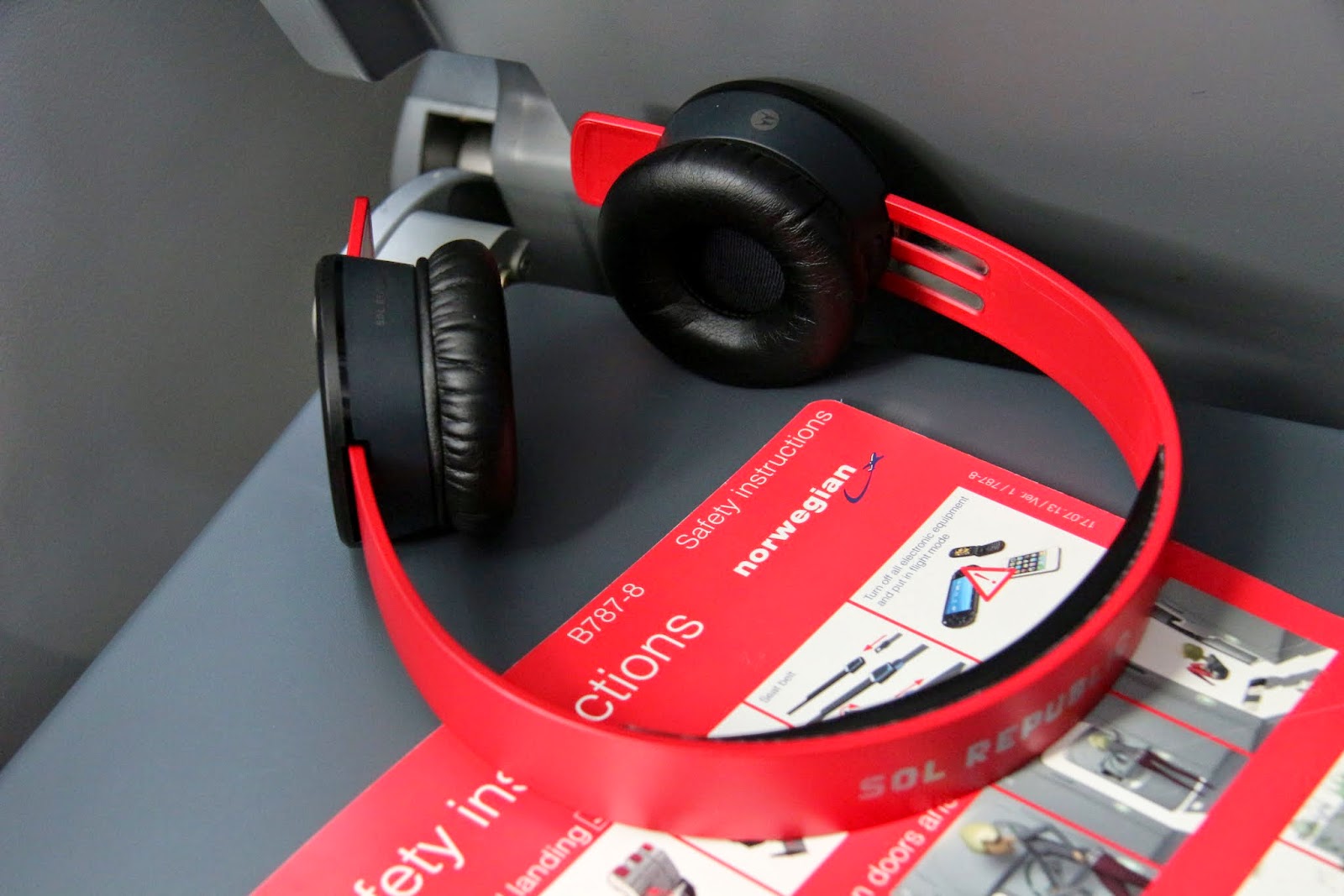
During my crazy month of April, I finally had the opportunity to try out my SOL Republic Bluetooth headphones on a plane. Naturally, performance here is going to be a big deal for me. The wireless features are great (as I first reported here), but planes offer a much different environment than around town.

So, how did they do?


Unfortunately, not that great. They did exactly what they were supposed to do (working both wirelessly and with the corded option perfectly), but the noise found in the Norwegian 787 was just too much for these otherwise good headphones. After being spoiled with active noise cancellation, I don't think I can ever fully go back. On the other hand, after being exposed to the freedom that comes with bluetooth wireless (again, first raved about here), I don't think that I can go back to a wired headset either.

While I'm still using these day to day, I am now going to have to find a pair that brings in the trifecta: Bluetooth, quality sound, and active noise cancellation. We'll see what I find!

Sunday, March 29, 2015

Should I be afraid of flying? Looking at risk in light of the Germanwings disaster

On March 24th, 2015, one of the worst possible scenarios in aviation happened: A co-pilot purposefully caused an aviation disaster. Even worse is that all signs point to a fifteen minute long descent where the co-pilot purposefully kept the pilot out of the cockpit and where the people on the plane knew what was happening. Crashing into a mountain is unfathomable in itself, but the feeling of helplessness that the pilot and others on board must have felt make it far worse.

Photo by Aero Icarus
Given this horror and the very bad year of commercial disasters in 2014, should we stop flying or be afraid of flying? My answer is no. While there is always a risk when getting on a plane, flying is still one of the safest ways to travel and safer than many things we do without a thought on a daily basis.

There are various sources that peg the odds of dying in a plane crash somewhere in the range of one in a couple million for any given flight, but perhaps the risk published by the national safety council tells a better story. They publish information about what the odds of dying from a particular cause over the course of a lifetime on their website here (helpfully, they note that the overall odds of dying by any cause is 1 in 1).

Odds of dying by "Air and Space Incidents": 1 in 8,357

Odds of dying by "Choking from Inhalation and Ingestion of Food": 1 in 3,649

Odds of dying by "Motor Vehicle Crash": 1 in 112


...and there you have it. Getting on a plane is objectively much safer than things we do every day, like drive to work or eat anything at all.

Of course, there is also the subjective experience, which is often feel that things we don't have control in (like being a passenger in a flying metal tube) are more dangerous than things that we feel we have control over (like pilot a metal cube on a highway with thousands of other metal cubes that act completely on their own). Hopefully, being able to look at the actual odds can help us more rationally judge the risk (and control our fear, if the recent news is bothering you) when we do need to take the next trip on a plane.